

Your roof looks old. It may be leaking in spots, and some shingles are missing. You know it’s time to repair or replace it, but money is tight.
Is there anything you can do? Are there government grants for roof replacement?
The short answer is yes, but they are usually limited to certain homeowners and programs. In many cases, help paying for a new roof may come through a grant, a low-interest loan, or a local housing repair program for low-income households, seniors, rural residents, or tribal communities. Understanding where to look first can save you time and help you avoid misleading “free roof replacement grants” claims.
In this guide, we examine what types of roof replacement grants may be available in 2026, who may qualify, where to start, and what to do if you don’t qualify for a grant.
In This Article
Are There Government Grants for Roof Replacement?
Yes, government grants for roof replacement do exist, but they are not widely available as direct “free money” for every homeowner. Most assistance is targeted to households with specific needs, such as very low income, older adults, rural homeowners, or people applying through local housing rehabilitation programs.
That distinction matters. When people search for free roof replacement grants, they are often looking for any type of help with roof repair or replacement costs. In practice, that help may come in one of three forms:
- A grant that does not need to be repaid
- A low-interest loan
- A locally administered repair or rehabilitation program
Grants vs. Loans vs. Local Assistance
A grant is the most appealing option because it usually does not require repayment, but it often has strict eligibility requirements based on your income, age, location, or property.
Low-interest loans may be helpful if you qualify, and some federal programs combine loans and grants based on age, income, and repair needs.
Local assistance programs are often the most practical place to start. Cities, counties, housing agencies, and community action organizations may provide assistance with roof replacement for rural homeowners, low-income families, seniors, or residents in older homes that need safety repairs.
A Brief Note About “Free Roof” Claims
Be careful with ads or messages that promise guaranteed free roof replacement grants. In most cases, the federal government does not offer direct free home repair money to all homeowners. Real programs usually involve eligibility screening, application paperwork, funding limits, and local administration. If a claim sounds too simple or overly urgent, treat it with caution.
Who May Qualify for Roof Replacement Assistance?
Eligibility for roof repair grants usually prioritizes homeowners who fall into categories such as low income, seniors, rural residents, tribal members, or those enrolled in local housing rehab programs. Each program sets out specific requirements based on income, location, age, or homeowner status.
Low-Income Homeowners
Many housing repair and weatherization programs focus on homeowners with limited income. Income limits vary by location, household size, and program rules, so it’s better to check current local guidelines.
Seniors
Older homeowners may qualify for grant-based help more often than younger applicants, especially when the roof issue creates a health or safety hazard.
Rural Homeowners
Some USDA-backed programs are intended for very-low-income homeowners in eligible rural areas. If you live outside a major metro area, it is worth checking whether your address qualifies for rural housing assistance.
Tribal Communities
Certain home repair programs are available to eligible members of federally recognized tribes, including assistance administered through tribal housing organizations.
Homeowners in Local Rehabilitation Programs
Your city or county may run housing rehab programs that include roofing work when the roof condition affects safety, structural integrity, or habitability. These programs may be funded with federal dollars but administered locally.
Federal Programs That May Help With Roof Repair or Replacement
If you are asking, “Does the government help pay for a new roof?”, the answer may depend on which program fits your situation. The programs below are among the most common options available for roof replacement assistance.
Weatherization Assistance Program (WAP)
Offered by the U.S. Department of Energy, this program aims to improve the energy efficiency of low-income households. Its primary focus is on weatherization measures such as insulation and air sealing, but it may also cover roof replacements if they boost energy efficiency.
To qualify for this grant, you must make no more than 200 percent of the current federal poverty income level. Priority is given to the elderly and disabled, households with high energy consumption, emergency situations, and homes with preschool-age children.
If someone in your household receives Supplemental Security Income (SSI) or Aid to Families with Dependent Children, you automatically qualify for Weatherization Assistance.
To Apply: Submit your application to the agency that services your county. Start by identifying your state weatherization administrator at this website, then contact them.
Section 504 Home Repair Loans and Grants
Offered by the U.S. Department of Agriculture, this program offers grants and loans to assist homeowners with home repairs, including roof replacements. It’s mainly centered on improving home safety for the elderly and disabled.
The USDA provides grants to very low-income, rural, elderly homeowners. Grants may reach up to $10,000; loans up to $40,000, and higher assistance in presidentially declared disaster areas. These funds support home modifications for elderly or disabled residents to improve safety and remove health hazards.
To be eligible for this grant, you must:
- Be the homeowner and occupy the house
- Have a household income that does not exceed the very low limit by county
- Live in a rural area of the country (for a list of eligible areas, visit this page)
- Be 62 years of age or older
If the property is sold within three years, the grant must be repaid.
To Apply: Contact your local USDA Service Center. To find yours, visit this site.
Housing Preservation Grant
Also offered by the USDA, the USDA Rural Housing Preservation Grant provides funding to repair or rehabilitate housing for very low and low-income families, assuring these homes remain habitable over time. Unlike the above grants, these aren’t directly accessible by individual homeowners. Instead, they’re available to state and local governments, nonprofit organizations, and federally recognized Tribes in eligible rural areas. Homeowners then apply through a local organization that has received a grant.
Check with your local authorities for more information. You can also contact a roofing contractor in your area, who may be able to offer more details.
To Apply: Contact your local rural development office for more information.
HUD Community Development Block Grants (CDBG)
This grant, offered by the Department of Housing and Urban Development (HUD), provides funds to local governments and community organizations for various community development projects, including housing rehabilitation.
Some communities allocate a portion of these funds for home repairs, including roof replacements. Eligibility varies by location.
To Apply: Check with your local government or housing authority for details.
Housing Improvement Program for Tribal Members
Administered by the Bureau of Indian Affairs (BIA) and federally recognized American Indian tribes, this program helps “eliminate substantially substandard Indian owned and inhabited housing for very low income eligible American Indians and Alaska Natives living in approved tribal service areas.” This program can support essential repairs that help make a home safer and more habitable, including needed roofing work in some cases.
To be eligible, you must:
- Be a member of a federally recognized American Indian tribe or be an Alaska Native
- Live in an approved tribal service area
- Have an income that does not exceed 125 percent of the U.S. Department of Health and Human Services (DHHS) Poverty Guidelines (generally characterized as low or very low income)
To Apply: Check with the nearest BIA-operated or tribal social service provider. For more information on finding a provider in your area, contact the nearest BIA regional office.
State and Local Roof Repair Programs
Many homeowners will find that the best help with roof replacement is not a national grant program, but a state, county, or city-based housing program. State housing finance agencies, local housing authorities, and nonprofit community organizations may all offer help paying for a new roof when funds are available.
Like federal grants and loans, these programs typically assist low-income individuals and families, seniors, and disabled homeowners, and may include grants for roof replacements.
To find out more, search for “housing assistance programs” in your state or locality.
Program Comparison: Where Roof Replacement Help May Come From
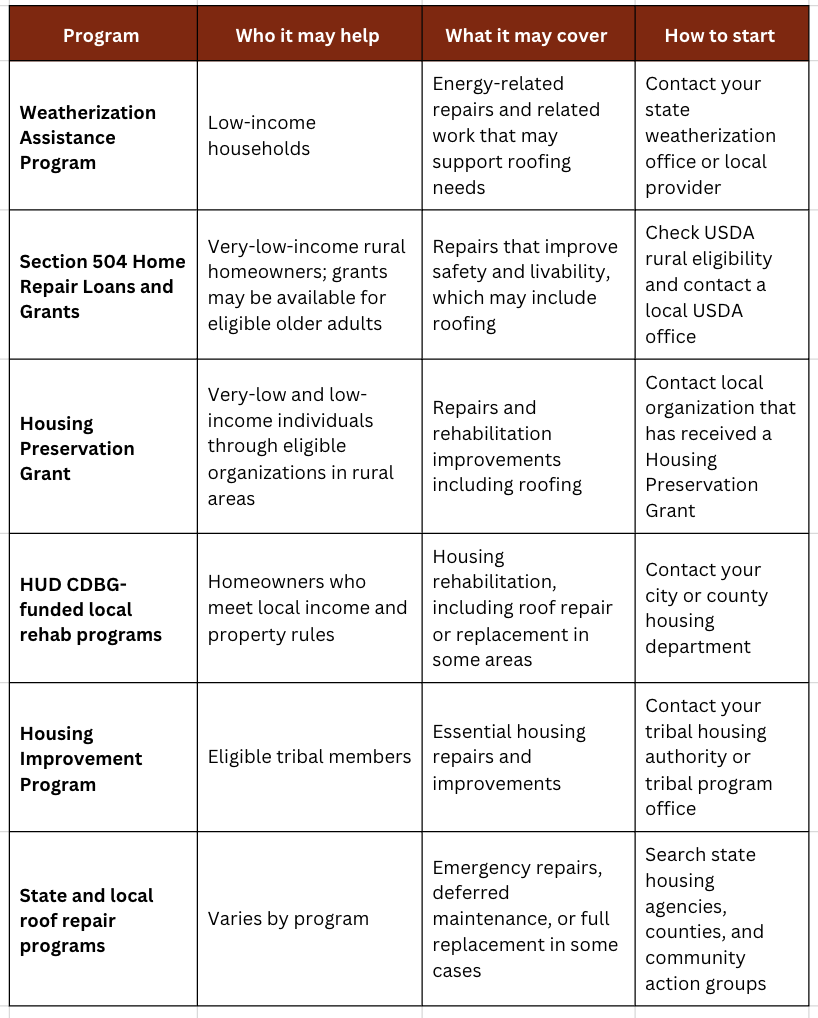
Where to Start Looking for Roof Replacement Help
If you want to know how to get help paying for a new roof, start locally and work outward. Many programs are location-based, and local staff can often tell you quickly whether roof work qualifies.
Contact Your Local Housing Authority or Housing Department
Ask whether your city or county offers housing rehabilitation funding, emergency repair grants, or homeowner assistance programs. Be specific and ask if roof repair or replacement is an eligible use of funds.
Check Your County or Community Action Agency
Community action agencies often help residents connect with weatherization services, home repair support, and income-based assistance programs. They may also know about nonprofits, or emergency funding not listed elsewhere.
Check Your State Weatherization Office
If your home needs roof-related work related to energy loss, moisture problems, or safety concerns, your state weatherization network may be able to guide you to the right program.
Review USDA Rural Eligibility
If you live in a rural area, confirm whether your property is eligible under USDA guidelines. This is one of the most important steps for rural homeowners looking for roof replacement assistance.
Ask About State Housing Finance Agencies
State housing finance agencies sometimes list repair assistance, housing preservation programs, or partnerships with local groups that offer low-income roof replacement assistance.
Check With Local Nonprofits and Housing Counselors
Nonprofits, senior service organizations, and local housing counselors may be aware of short-term repair grants, volunteer repair efforts, or special funding rounds for older adults and low-income homeowners.
What to Have Ready Before You Apply
The application process is often easier when you gather key documents before you start. Many agencies will ask for some or all of the following:
- Proof of homeownership
- Government-issued identification
- Recent income documents
- Photos of roof damage
- Homeowners insurance information
- A contractor estimate, if requested
- Basic details about household size and occupancy
Having these forms ready can speed up your application and help program staff determine whether you qualify for roof replacement assistance.
Scam Awareness: How to Protect Yourself
Searches for free roof-replacement grants for low-income homeowners often yield misleading offers. Some scams use official-sounding language, promise instant approval, or ask for fees before any application review.
Watch for these warning signs:
- Claims of guaranteed approval
- Requests for upfront payment to access grant money
- Pressure to sign quickly
- Unclear program names or missing contact details
- Messages that do not connect you to a real agency or local office
A legitimate program will usually clearly explain eligibility rules, required documents, funding limits, and next steps. If you are unsure, contact your local government housing office directly before disclosing personal information.
Disaster-Related Repair Help
If your roof was damaged by a major storm or other declared disaster, additional repair assistance may be available through disaster recovery channels. In some cases, rural repair programs may offer expanded help in presidentially declared disaster areas.
This type of support is separate from standard home improvement funding. If storm damage is involved, you should also review your insurance coverage and ask local agencies whether disaster-specific housing repair funds are open in your area.
To Apply: Start by checking if you’re eligible for FEMA’s Individuals and Households Program (IHP) or the USDA Single Family Housing Disaster Assistance Fund Program.
What If You Don’t Qualify for a Grant?
If you don’t qualify for a grant, you still have options. Many homeowners who search for government grants for roof replacement are really trying to solve a budget problem.
Explore Financing Options
If grant funding is unavailable, roof replacement financing options may help spread the cost of a needed project. Structured financing can be useful when roof damage cannot wait.
Ask Whether Repair Is Possible
A professional inspection can help you determine whether a targeted repair is enough or whether a full replacement is the better long-term choice. In some cases, a repair can buy time while you continue searching for assistance.
Understand the Signs of Urgent Roof Failure
If you are not sure how serious the problem is, review the signs you may need a new roof. Active leaks, sagging areas, and widespread shingle damage usually require quick attention.
Plan for Replacement With Better Cost Information
If you need to budget for the project, it helps to understand what drives pricing. You can learn more about roof replacement and compare repair versus replacement based on your roof’s age and condition.
Final Thoughts

While government grants for roof replacement are available, not every homeowner will qualify. The best first step is to check the programs available to you based on your income, age, location, and housing situation, then gather the documents you need before applying.
If you don’t qualify for a grant, your local Erie Home team can help you understand your roofing options. Schedule a free estimate to determine whether repair or replacement makes the most sense for your home, and to review available financing options.
Frequently Asked Questions
Are there government grants for roof replacement?
Yes, but they are usually limited to qualified homeowners and specific programs. Most roof replacement grants are tied to income, age, rural location, tribal eligibility, or local housing rehabilitation rules.
Does the government help pay for a new roof?
Sometimes. Government help may come through a grant, a low-interest loan, a weatherization program, or a locally managed housing repair program rather than a direct federal payment to every homeowner.
How do I get help paying for a new roof?
Start by contacting your local housing department, county community action agency, state weatherization office, and USDA office if you live in a rural area. Ask specifically whether roof repair or replacement is covered.
Are free roof replacement grants real?
Some legitimate grant programs exist, but the phrase “free roof replacement grants” is often misleading. Real assistance programs typically have eligibility rules, funding caps, and application requirements.
What if I need a new roof and cannot afford it?
Look into grant and loan programs first, then compare financing, phased work, or repair options. A professional inspection can help you decide the most cost-effective next step.
Can seniors get roof repair grants?
In some cases, yes. Roof repair grants for seniors may be available through rural repair programs, local housing rehab programs, or nonprofit assistance efforts, depending on age, income, and location.
Where can I find state and local programs for roof repair?
Start with your city or county housing department, state housing finance agency, community action agency, and local nonprofit housing groups. These organizations frequently manage or refer homeowners to available programs.
Resources
- Farmers.gov USDA. Find Your Local Service Center. https://www.farmers.gov/working-with-us/service-center-locator.
- FEMA. Individuals and Households Programs. https://www.fema.gov/assistance/individual/program.
- Rural Development USDA. Housing Preservation Grants. https://www.rd.usda.gov/sites/default/files/fact-sheet/508_RD_FS_RHS_HPG.pdf.
- Rural Development USDA. Single Family Housing Disaster Assistance Fund Program. https://www.rd.usda.gov/programs-services/single-family-housing-programs/single-family-housing-disaster-assistance-fund-program
- United States Department of Agriculture (USDA). Income and Property Eligibility Site. https://eligibility.sc.egov.usda.gov/eligibility/welcomeAction.do.
- U.S. Department of Energy. Weatherization Assistance Program. https://www.energy.gov/cmei/scep/wap/weatherization-assistance-program.
- U.S. Department of Housing and Urban Development. Community Development Block Grant Program. https://www.hud.gov/hud-partners/community-cdbg.
- U.S. Department of Interiors, Indian Affairs. Housing Improvement Program. https://www.bia.gov/regional-offices/great-plains/housing-improvement-plan.