

Summer brings long days, backyard cookouts, and intense weather. Severe thunderstorms, heavy rain, and flash flooding all put your home’s drainage and water-management systems to the test. While your roof and windows get attention, one costly problem often goes unnoticed until the damage shows up: basement moisture.
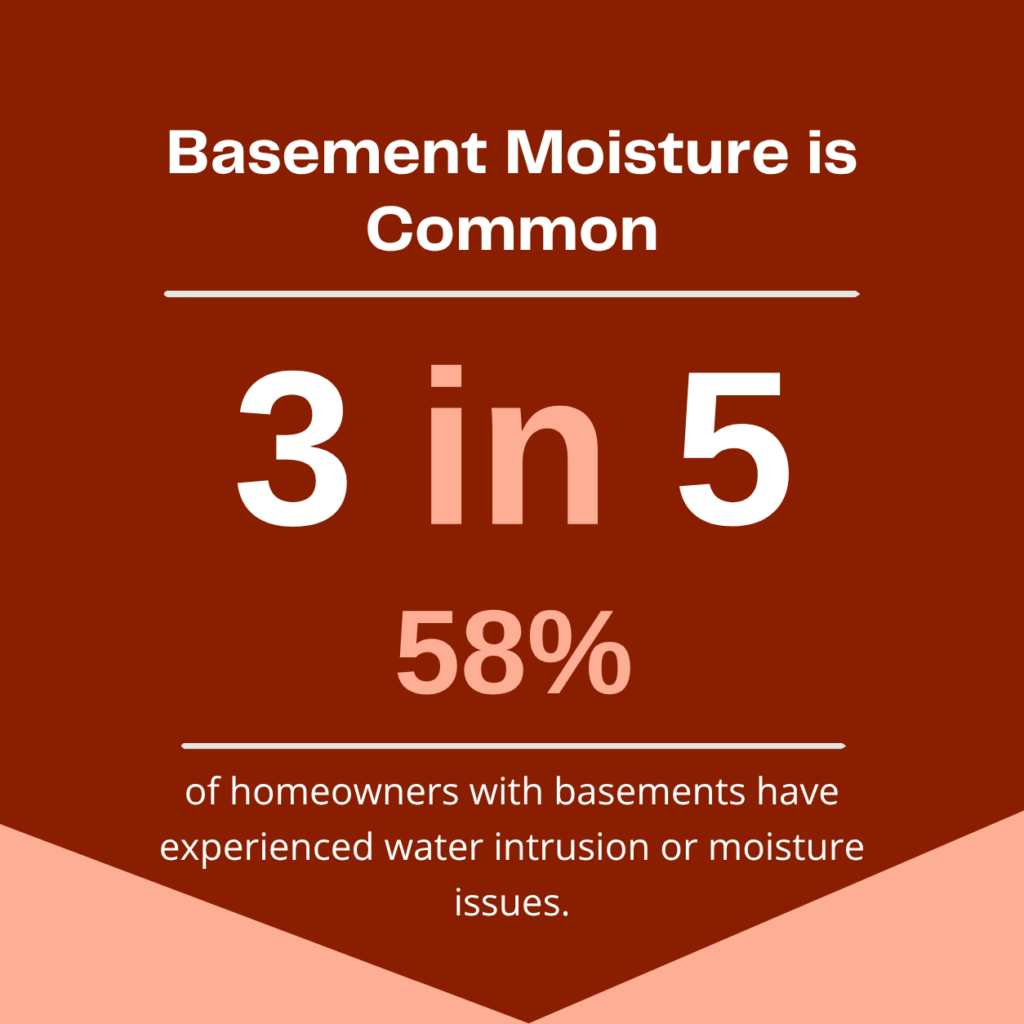
You’re not alone if you’ve dealt with it. A recent survey found that nearly 3 in 5 homeowners with basements (58%) have experienced water intrusion or moisture issues.* The survey also shows that many homeowners are unsure when the risk is highest. Thirty percent of homeowners believe moisture problems are equally likely year-round, while 17% are unsure.*
There’s good news: basement moisture is often preventable. Most homeowners overlook early warning signs and the factors that let water in. Understanding how summer storms affect your foundation and what to check before and after heavy rain can help you protect your basement and the rest of your home.
In This Article
Why Summer Storms Increase the Risk of Basement Moisture
Summer storms can arrive suddenly and dump heavy rain in a short time. When gutters, downspouts, soil, or other drainage systems cannot move that water away fast enough, the ground around your foundation may become saturated.
As water collects in the soil, it places pressure against foundation walls and floors. This is known as hydrostatic pressure. Water may then seep through cracks, joints, basement windows, or porous foundation materials.
“Heavy summer rain is one of the toughest tests a home’s foundation faces. When drainage systems cannot keep up, water may collect around the home and find openings into the basement.” — Jake Broerman, Basement Waterproofing Expert, Erie Home
The following eight tips can help you spot potential problems, improve drainage, and lower your basement moisture risk before the next storm.
8 Tips to Help Prevent Basement Moisture During Summer Storms
1. Watch—and Smell—for Early Signs of Moisture
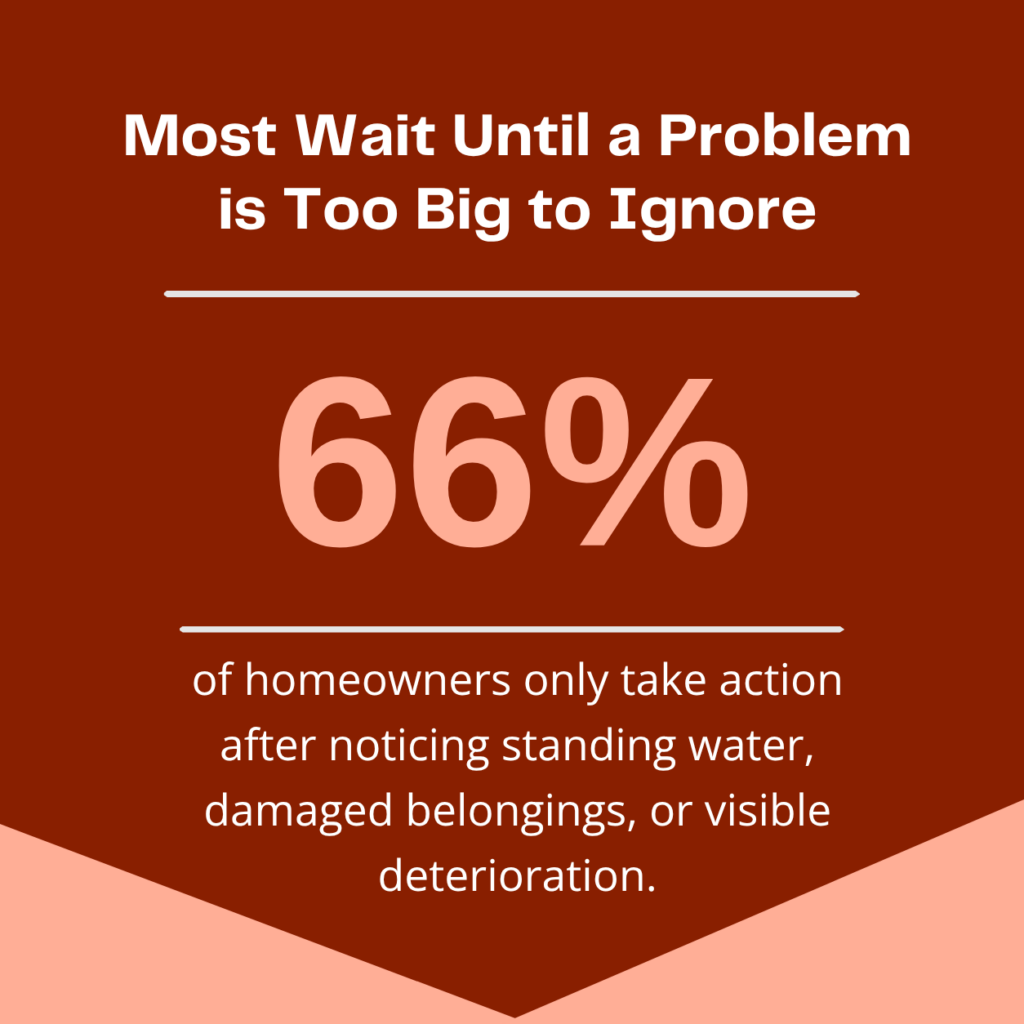
Many homeowners wait until a moisture problem becomes difficult to ignore. In fact, the survey found that 66% of homeowners only take action after noticing an obvious issue,* such as standing water, damaged belongings, or visible deterioration.
However, basement moisture often leaves smaller clues first, including:
- Damp or discolored walls and floors
- Water stains or dark patches on concrete
- A powdery white deposit on foundation walls
- Condensation on windows, pipes, or walls
- Peeling paint or bubbling wall coverings
- Mold or mildew growth
- A persistent musty odor
The powdery residue sometimes found on concrete is called efflorescence. It forms when moisture moves through masonry, leaving mineral deposits behind as it evaporates. While the residue itself may not damage your foundation, it can indicate that moisture is passing through the wall.
Pay attention to odors as well as visible changes. A recurring musty smell can point to excess humidity, condensation, a hidden leak, or damp materials where mold or mildew may be growing.
Cleaning or deodorizing the room may briefly improve the smell, but it will not address the ongoing moisture source. If the odor returns, inspect the area more closely and determine where the moisture may be coming from. Learn more about how to identify and address musty basement odors.
2. Keep Debris Out of Gutters and Downspouts
Your gutters play an important role in directing roof runoff away from your foundation. When gutters clog with leaves, twigs, and other debris, rainwater can overflow near your foundation rather than flow through the downspouts.
Before the next summer storm:
- Check gutters for visible leaves and debris.
- Confirm that water is moving toward the downspouts.
- Look for sagging, separation, or leaks.
- Make sure downspouts are connected and positioned correctly.
- Use splash blocks or downspout extensions to help carry runoff away.
Cleaning out gutters from a ladder carries fall and injury risks, especially when gutters are high, hard to reach, or located above uneven ground. Consider hiring a professional when they can’t be safely inspected or cleaned out from the ground.
3. Direct Drainage Away From Your Foundation
What happens outside your home can directly affect what happens inside your basement. If your yard or landscaping slopes toward your foundation, rainwater may accumulate along the walls rather than moving away from your house.
Walk around your home and look for:
- Soil that slopes toward your house
- Low areas where water pools after rain
- Downspouts that empty beside the house
- Mulch or landscaping that traps water near the walls
- Damaged or poorly positioned window wells
- Patios, walkways, or driveways that direct runoff toward your home
The ground immediately surrounding the house should allow water to flow away from the foundation. Downspouts should also discharge water onto an area where it can continue moving away from the wall rather than flowing back toward the wall.
Minor drainage problems may be addressed by repositioning a downspout extension or correcting a small low spot. More significant grading concerns, persistent pooling, or a yard that slopes sharply toward the house most likely require professional drainage or landscaping improvements.
For more information about exterior and interior moisture control, see our guide on how to keep water out of a basement.
4. Know What a Dehumidifier Can—and Can’t—Do
Not all basement moisture comes through the foundation. Warm, humid summer air can also create condensation when it meets cool basement walls, floors, pipes, or windows.
A dehumidifier can help remove excess moisture from the air, making a humid basement more comfortable. It’s generally recommended to maintain basement humidity between 30% and 50%, though ideal settings will vary by room and local conditions.
A dehumidifier is most useful when the basement is generally dry but becomes humid or develops light condensation during warm weather. It may also help limit the conditions that allow mold and mildew to grow. However, a dehumidifier can’t stop water intrusion.
Look beyond humidity control if you notice:
- Standing or flowing water
- Recurring water stains
- Damp areas that return after rain
- Efflorescence on foundation walls
- Water is entering through cracks or wall-floor joints.
These signs may indicate a drainage or foundation issue rather than seasonal humidity alone. Review additional summer basement maintenance tips for managing moisture and humidity.
5. Inspect Foundation Cracks for Changes & Leaks
Not every crack indicates a major structural issue. Concrete and masonry can develop cracks as a home settles and the surrounding soil expands, contracts, freezes, or moves.
Still, every crack is worth checking because it may provide a path for moisture to enter. Inspect basement walls and floors for:
- Cracks that are widening or growing over time
- Horizontal cracks in foundation walls
- Stair-step cracks in concrete block or masonry
- Crumbling or deteriorating concrete
- Cracks that appear wet or leak during rain
- Bowing, leaning, or inward movement in a wall
Not every crack can be resolved with a simple seal. The right repair depends on the crack’s location, size, and underlying cause. A small, stable crack will typically require a different solution than an actively leaking crack, or one associated with wall movement.
Cracks that widen, leak repeatedly, or appear alongside other structural changes should be evaluated by a professional.
6. Know the Main Types of Basement Waterproofing
Many homeowners don’t realize there’s more than one type of basement waterproofing. And each system deals with different moisture sources, foundation types, and property conditions.
| System | What it does | Common Application |
| Interior drainage system | Collects water around the basement’s interior perimeter collects and directs toward a sump pump or drainage point | Managing water that enters around the foundation or at wall-floor joint |
| Interior wall membrane | Covers foundation walls and directs moisture downward into drainage system | Often paired with interior drainage to help manage wall seepage and condensation |
| Exterior waterproofing | Requires excavation around the foundation so waterproof materials and drainage components can be installed outside | Properties where exterior access and conditions make excavation practical |
| Sump pump system | Collects water in a sump basin and pumps it away from the home | Used as part of many interior water-management systems |
Interior drainage systems are commonly used because they can collect water entering around the foundation and direct it away without excavating the entire exterior of the home. Depending on the property, they may be paired with a wall membrane, sump pump, backup system, or other moisture-control components.
Exterior waterproofing may be appropriate in certain situations, but it can involve major excavation and disruption to landscaping, patios, sidewalks, or other areas around the house. The right system depends on where moisture is entering, the foundation’s construction, and whether the concern involves humidity, seepage, drainage, or structural movement.
Familiarize yourself with the different types of basement waterproofing systems before talking over options with a professional.
7. Check the Basement After Heavy Rain
The period immediately after a storm can reveal problems that are hard to spot during dry weather. Once conditions are safe, walk through your basement and inspect areas where moisture commonly appears, and check:
- Corners and wall-floor joints
- Areas beneath the basement windows
- New and old foundation cracks
- Pipes and utility penetrations
- The area around a sump pump
- Stored boxes, furniture, and belongings near exterior walls
- Carpeting or finished walls that feel damp
- Floor drains and low points where water could collect
A moisture meter may also help homeowners compare conditions in different areas, although it does not identify the source on its own. If you have a sump pump, confirm that it activated during the storm and that water discharged away from the foundation.
Log any water stains, damp areas, or leaks with photos. Note where they appeared and the intensity of the rain to help your local waterproofing expert identify the likely source.
If you discover standing water, avoid entering until electrical and contamination hazards have been evaluated. Check out our flooded basement guide for additional safety and cleanup tips.
8. Take Action Before Heavy Rain Arrives
Do not wait until water is already on the basement floor to begin evaluating moisture risks. A stretch of dry summer weather gives you an opportunity to make basic improvements and schedule more involved work before another storm arrives.
Use dry days to:
- Inspect gutters and downspouts.
- Check grading and drainage around the home.
- Look for foundation cracks or changes in the walls.
- Test the sump pump, if you have one.
- Move vulnerable belongings away from the basement walls.
- Store documents in sealed, waterproof containers.
- Periodically check the basement humidity.
“The best time to fix a basement is before it leaks. Homeowners who take action during the calm months avoid the panic, the cleanup, and the much larger bill that comes with waiting.” — Jake Broerman, Basement Waterproofing Expert, Erie Home
Acting now can also prepare your home for the seasons ahead. Many of the same drainage, humidity, and foundation concerns that pop up during summer storms continue during fall rain and winter freeze-thaw cycles.
When to Call a Basement Waterproofing Professional
Some moisture-prevention tasks are manageable as part of routine DIY home maintenance. Other solutions call for specialized knowledge to identify where water is entering and determine which solution is appropriate.
The survey found that only 17% of homeowners proactively contact a professional waterproofing company.* Waiting until visible damage develops can allow a smaller moisture concern to become more disruptive.

Steps Homeowners Can Take
Depending on safety and accessibility concerns, many homeowners are able to:
- Watch for early signs of moisture.
- Monitor stable foundation cracks for changes.
- Run a dehumidifier to manage seasonal humidity.
- Check where downspouts discharge.
- Look for areas where water pools near the house.
- Inspect the basement after storms.
- Test an existing sump pump according to the manufacturer’s directions.
- Move belongings away from damp walls or floors.
Avoid climbing ladders, entering standing water, opening electrical equipment, or attempting structural repairs without the appropriate training and equipment.
Reasons to Request a Professional Inspection
Consider contacting a basement waterproofing or foundation professional when:
- Water returns after the basement has dried.
- Leaks appear during or after multiple storms.
- Standing water collects on the floor.
- A musty odor or visible moisture continues despite humidity control.
- Efflorescence repeatedly forms on foundation walls.
- Cracks are widening, leaking, or changing.
- A foundation wall appears to be bowed, tilted, or displaced.
- You cannot determine where the water is entering.
- Your sump pump frequently fails to remove water.
- Previous patching or repairs have not resolved the issue.
A DIY-patch job treats what you can see. A professional inspection should find the source and provide the next steps to resolve the problem. Most basement waterproofing companies, including Erie Home Basement Waterproofing, offer free inspections.
Get Ahead of the Next Storm
Most homeowners with a basement have dealt with water intrusion or unwanted moisture. But this common problem isn’t one you must ignore.
Start with the basics. Watch for early warning signs, inspect your gutters, manage indoor humidity, and check your basement after heavy rain. Address the steps you can safely handle, and hire a professional when moisture keeps returning, or the source is unknown.
Basement moisture is easier to prevent than to repair. Taking action during summer’s dry stretches can help prepare your home for the next storm and years to come.
Erie Home offers basement waterproofing solutions designed around each home’s conditions. Schedule a free basement inspection with your local Erie Home waterproofing expert to spot potential moisture concerns and learn which options may be right for your home.
Frequently Asked Questions
How common are basement moisture problems?
Recent survey data found that 58%, nearly 3 in 5 homeowners with basements, have experienced water intrusion or moisture issues.* Dampness, condensation, musty odors, seepage, and standing water are all indicators of a basement moisture problem.
What causes water to get into the basement?
Water may enter through foundation cracks, wall-floor joints, basement windows, utility penetrations, or porous masonry. Common contributing factors include hydrostatic pressure, clogged gutters, short or poorly positioned downspouts, inadequate grading, sump pump problems, and saturated soil around the foundation.
Can I waterproof my basement myself?
You can take steps on your own, including cleaning out gutters, extending downspouts, correcting yard grading, sealing small cracks, and running a dehumidifier. But these only manage symptoms. Permanent solutions, such as interior drainage systems and sump pumps, require professional installation to address the source of the water problem.
How much does basement waterproofing cost?
The cost depends on the basement’s size, foundation type, water source, condition of the walls and floors, and the system required. A professional inspection is generally the most reliable way to determine which work is needed and receive a property-specific estimate. Acting early generally costs far less than repairing water damage later.
When is the best time to waterproof a basement?
The best time to evaluate basement moisture is before a major leak or flooding occurs. A dry stretch provides an opportunity to inspect the foundation, test drainage systems, make repairs, and complete waterproofing work before heavy rain puts those systems to the test.
*The findings come from a national survey of more than 1,300 U.S. homeowners commissioned by Leaf Home in February 2026 to better understand homeowners’ experiences, perceptions, and behaviors related to home maintenance and seasonal homeownership challenges.